


Let’s close this pride month with the reminder that the 2024 Eurovision Song Contest has been the queerest ever. In previous articles, we discussed the visibility and tolerance of LGBTQ+ folks in the context of European history, and the progress made over the decades to increase folks’ understanding of gender non-conforming and non-heterosexual being. As 2024 is currently the most modern year of the struggle for full gender and sexuality equality across all humanity, let’s talk about all the PROUD performers.

Sylvester Belt of Lithuania came to Eurovision as the first out gay soloist of the country, and gave fans the sophisticated and soft electronic-pop song, “Luktelk”. Nearly alone on the pursuit to increase LGBTQ+ visibility in his own country, Sylvester took the stage in Malmö and delivered what I consider an indomitable performance at the final.

Belgium this year was represented by the notorious Drag Race Belgique judge, Mustii. A tantalizing performance artist and charismatic pop star, Mustii has about 12 years of entertainment industry savvy and a distinct artistic style to demonstrate his knowledge. Coming to Malmö with “Before the Party’s Over” and sadly missing the final, Mustii is widening his array of experiences, continuing valiantly to show us all that LGBTQ+ culture always deserves to be seen, heard, and protected.
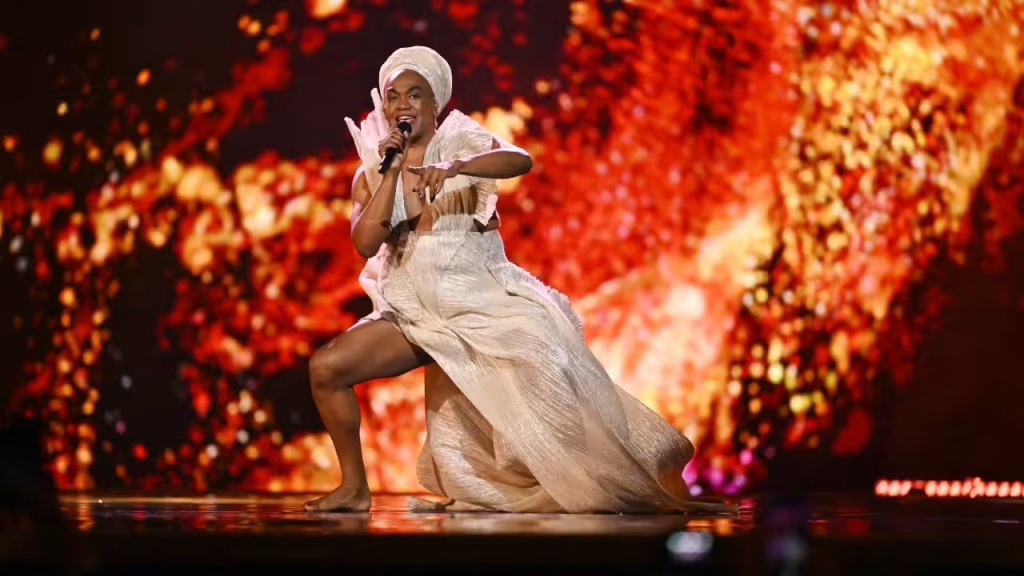
Just as Eurovision crossed the equator to include Australia in the contest as of 2015, Electric Fields gave the audience in Malmö and TV viewers the opportunity to transcend the idea of gender. The duo, comprised of the sweet and savory producer Michael Ross and the untouchably electrifying Zaachariaha represented the Land Down Under with the hopeful and anthemic dance track “One Milkali (One Blood)”. It’s a song which combines indigenous Yankunytjatjara language, visuals, and instrumental elements in its delivery, all while denoting the message of all humans being united as family. This song served as a testament to harmony in the universe, and combined it with the message that gender and self-expression being limited to just duality is restricted to a Western viewpoint.

Olly Alexander is a familiar name to listeners of pop music in the United Kingdom and far beyond. Conditioned by a journey wherein a safe path to self-identification as a gay man was a challenge to find inside and outside of the industry, Olly smacked Eurovision with the sweaty yet entrancing dance number called “Dizzy”. Onstage were, frankly, men dancing on each other. Without the visuals being explicitly raunchy, Olly opened up the discourse surrounding the shame and stigma of sexuality, and poignantly, non-heteronormative sexuality. The artistic choice of the “locker room” aesthetic used by the UK delegation elevates the conversation of sex into the metaphysical dimensions of “Dizzy”.

Bambie Thug is the first out nonbinary person to perform on the Eurovision stage, and truly a dynamite stick in Eurovision story. Giving us the wild and witchy “Doomsday Blue”, Bambie Thug earned 6th place at Eurovision, which would be the highest placing result for Ireland in 24 years. Advocating boldly for equality for LGBTQ+ people, and the militarily-politically oppressed in Sudan, Palestine, and Congo nonexclusively; Bambie Thug also caused a historical upset in the Eurovision community in regard to the EBU’s dishonorable practices with the artists, press, and delegations. The incalculable fearlessness and artistry they display has laid down for both Ireland and the artist as an individual an especially memorable legacy.

SAND! SAAAND! Denmark’s Saba was not only the first brown-skinned queer soloist to represent the country, but was also the first to do so with a song written by another out and proud queer woman: Swedish singer-songwriter Melanie Wehbe. Saba’s love was on display shortly after the final of the Danish national selection, where she kissed her girlfriend of 6 months after “SAND” won. Additionally, not a single person will tell me that the chorus to this song isn’t entirely iconic.

Aiko from the Czech Republic brought to Malmö the cathartic and empowering “Pedestal”, which became an instant cult classic in my household. Having strong phrases pertaining to self-advocacy and relinquishment of life’s constraints, this entry, written by a woman who loves other women, sailed through the Czech national final and connected with viewers around the world at ESC. “Pedestal”‘s punchy and unapologetic swagger shifted the overall style of the 2024 contest and emboldened the sense of liberty LGBTQ+ fans experience within Eurovision.

To close this Pride month, there’s no one more befitting than the radiant Nemo. Being only the second out nonbinary performer after Bambie Thug to perform on the Eurovision stage, they took the victory back to the founding nation of the beloved contest, Switzerland, with a combined total of 591 points, which is only 44 points ahead of 2nd place: Croatia. Their winning song “The Code” is a dynamic and whimsical number that moves across a myriad of frequencies and requires several layers of talent to perform live. Nemo’s victory signifies that no one, no matter who you love or how you’re meant to express yourself, should ever feel limited. Winning comes with the right work ethic. They won not because of their gender, but because they possess extraordinary expertise as a musician.
Though we may still be asking the question of the future of the Eurovision Song Contest as we head into July, how do YOU think the contest will evolve? Does having such a strong coalition of queer representation this year open the door for more artists? Let us know!